
The key to your business’s online visibility is Search Engine Optimization (SEO). However, with the constant changes in the algorithms and the preferences of search engines, SEO is a constant dance with new partners. Introducing artificial intelligence (AI) to the world of SEO.
The marriage of Artificial Intelligence (AI) and SEO is shaping up to be the perfect blend of human agility and machine accuracy. The old saying “fight fire with fire” has a whole new meaning here: AI algorithms, powered by machine learning, are the only way to stay ahead of the curve with the intricacies of today’s search engine algorithms.
AI + SEO is an emerging realm in digital marketing innovation. We will delve into how AI can revolutionize various components of SEO, including keyword research, content creation, and on-page optimization. We will discuss the impact AI has on different areas of SEO, such as keyword research, content creation, and on-page optimization. Prepare to witness AI revolutionizing the world of search engine optimization and the future of digital marketing.
How Does AI Help With SEO?
AI in SEO is a complete transformation in digital marketing. AI is the ability of machines to mimic human intelligence through various processes, including learning, reasoning, and problem-solving. In contrast, SEO is about ensuring that web content is optimized for better visibility and ranking on search engine results pages (SERPs). AI for SEO combines these concepts, using machine learning algorithms and data analysis to enhance SEO practices in innovative ways.
Broadly speaking, AI is revolutionizing SEO practices by enabling marketers to analyze vast amounts of data with unprecedented speed and accuracy. By applying machine learning techniques, patterns, trends, and correlations can be detected within data sets, and valuable insights can be gained into user behavior, search trends, and competitor strategies. By leveraging this data-driven approach, we can make informed decisions and adjust our SEO strategies to meet the changing algorithms of search engines and users’ preferences.
Using AI for SEO has abundant benefits. Time-saving tools like keyword research, content optimization, and link building can be automated using AI, allowing for more time to be spent on strategic planning and creative initiatives. Additionally, AI-powered algorithms can generate real-time analytics and performance metrics, allowing us to monitor the success of our SEO strategies and make on-the-spot adjustments as needed. AI for SEO also provides scalability, allowing businesses of all sizes to benefit from machine learning and effectively compete in the digital world.
How Is AI Improving Keyword Research?
AI tools for keyword research simplify discovering keywords and phrases that hold value, employing sophisticated techniques such as machine learning and natural language processing. These tools can process huge data sets and determine which keywords are worth targeting for high organic traffic. AI can analyze data and automate the discovery process, enabling you to focus your SEO efforts on keywords that have the highest potential for success.
AI can also enhance keyword targeting by leveraging sophisticated algorithms that go beyond simply analyzing search trends to understand user intent and the strategies of rival websites.AI can also improve keyword targeting by utilizing advanced algorithms that go beyond simply understanding search trends and the tactics of competing websites to really comprehend user intent. They are designed to interpret search queries by applying techniques like natural language processing (NLP), semantic analysis, and predictive modeling to comprehend the intent and context of the user’s query. They can assist us in identifying keywords that have a high relevance to our audience’s interests and preferences.
Suppose a fitness apparel business desires to tweak their keyword targeting strategy. By examining search patterns and user behavior, AI algorithms can detect trends in fitness-related searches and keywords, including “best running shoes” or “workout leggings. Knowing what these questions may imply, the company can develop targeted material and advertising campaigns that align with their viewers’ fitness objectives and choices.
AI algorithms are particularly effective at targeting long-tail keywords, which are highly specific and niche terms with high conversion rates but lower search volumes. Suppose one of the fitness apparel companies wants to grow its online presence. A good AI system could find gems like “moisture-wicking running shirts for women” or “compression socks for marathon runners” rather than a wide net of keywords such as fitness apparel. Imagine a runner navigating the web looking for their ideal gear to optimize running performance. If they find a site geared towards these specific keywords, they have a better chance of finding what they want, and thus will have a better chance of converting.
AI keyword targeting isn’t simply about identifying the obvious keywords; it is about outsmarting your rivals. Suppose you could see the following scenario: a competitor is ranked first for the most sought-after queries in your niche. They seem to be on to everything. However, with AI, they take a look at their strategies and identify the areas that they didn’t consider. All of a sudden, you have a list of other keywords or variations that you can use that have the same traffic potential, but are not nearly as competitive.
What Role Does AI Play in SEO Content Creation?
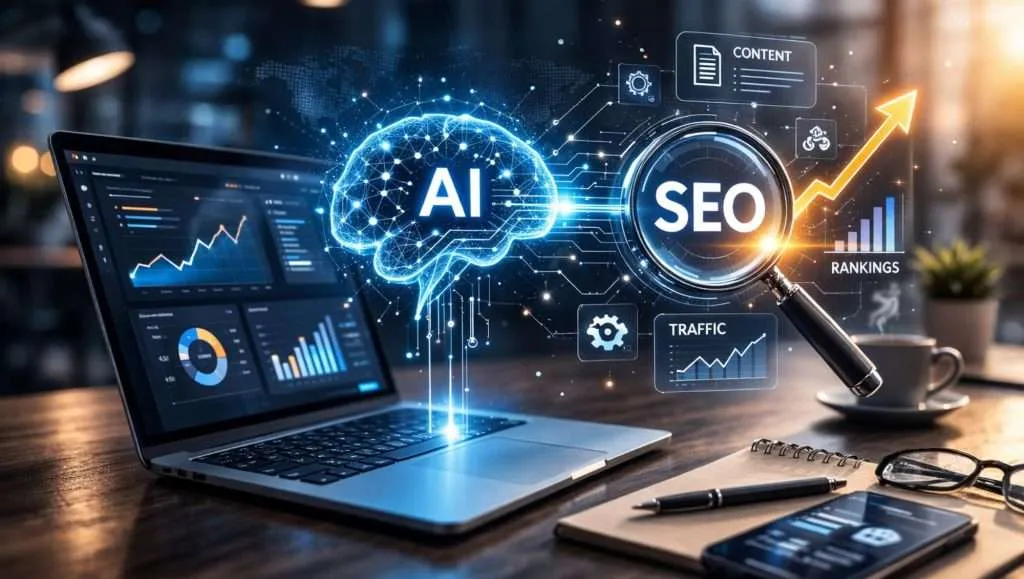
Content marketers have a lot of projects to manage and deadlines to meet. They must develop content that’s interesting, search engine optimized, and appealing to their target audience in order to draw visitors to their site. AI content generation tools can suggest topic ideas, outlines, and even provide a complete content draft with your target keywords and audience preferences. They use search engine and social media data to find what is trending, relevant keywords, and popular questions in your niche.
On that same note, if you’re a writer faced with the task of creating SEO-friendly content for your website, you can use generative AI to automate content generation. With the help of generative AI, you can create engaging, optimized SEO copy that connects with your audience and improves your site’s search engine rankings.
AI can also help when it comes to optimizing the website’s content for increased visibility once it’s ready for optimization. It helps it by analysing and identifying possible areas of improvement, and recommending optimisations that will improve the performance of its SEO. It analyses the content for keywords, metadata, readability, and semantic relevance to optimise it for search engine algorithms and user intent.
AI algorithms can decipher the intent and meaning behind search queries. Through NLP techniques, we can be sure that our content meets the needs, questions, and concerns of our target audience. Semantic analysis is another task that can be accomplished by AI algorithms. This means that using relevant keywords and phrases can make our content more detailed and informative, giving it a higher ranking in search engine results.
The AI-driven content recommendation engines transform the content experience, adapting the recommendations based on users’ preferences, behaviors, and interactions. With AI, a visitor will be presented with a list of articles, videos, or products tailored to their interests and browsing history upon their arrival on your website. They are looking for an article on something that they didn’t know before or something that is a pain point that they are experiencing. They are intrigued and click through. As interactions happen, AI continuously refines its suggestions, leading it on a trajectory that can result in a conversion, whether that’s joining a newsletter, adding a product to their cart, or booking a consultation. If this visitor didn’t receive the personalized content recommendations offered by AI, they may have left your site without taking advantage of its potential.
How Does AI Improve On-Page Optimization?
On-page optimization is the process of optimizing web pages one by one to increase their ranking in search engines and to get more traffic.
As an example, you have a blog post optimised for healthy eating habits. You’ve already used your main keywords, but you’re not sure if you have other keywords you need to add to improve your SEO. AI tools can provide you with suggestions for new and relevant keywords that are specific to your content. These tools not only detect the keywords but also give you great direction of where and how to put them in your content.
Then, take into account the readability of your content. You’d like your blog post to be appropriate for many readers, but you just aren’t sure how to guarantee it will be engaging. With the help of AI algorithms, your content structure, language patterns, and user engagement data are analyzed. Using this analysis, AI can recommend strategies to improve readability, ensuring that your content is engaging and captures readers from beginning to end.
AI dynamically generates metadata based on the latest analysis of user behavior and search trends, which helps optimize content. Perhaps you’re creating a product description for a new fitness tracker. AI updates the title tags, meta descriptions, and header tags in real time to maintain their attention-grabbing, relevant nature and boost click-through rates and page traffic.
Images can also be used to benefit from AI. Imagine that you’re creating a product page for a hiking backpack. AI suggests alt text and image tags infused with relevant keywords, maximizing your content’s appeal in image searches and improving overall SEO performance.
AI can also help you to optimize your content for search engines and humans intelligently. For those developing an area hiking guide, AI can suggest potentially logical subheadings and sections of your content to provide users with better navigation and understanding of your guide, as well as improved crawlability for search engines.
AI performs optimizations for mobile users to make sure your site appears in mobile search results. AI can offer suggestions for layout and design improvements to create a smoother mobile experience and boost your SEO results.
Personalization is a frequent talked about concept. AI-driven recommendation systems go the extra mile in personalization. Suppose you have a user visiting your site looking for hiking equipment. By taking into account preferences, behavior, and demographics, AI customizes content and layout suggestions to tailor future recommendations to the individual, making it more likely to show products and content aligned with their interests and requirements.
What Role Does AI Play in Link Building?
Link building is an essential part of SEO that entails obtaining hyperlinks from other sites to your own. Backlinks will help search engines recognize that your website is trustworthy and credible, which will increase your website’s visibility and ranking in search results.
AI algorithms can guide you to pick the websites you should partner with for link building activities. With natural language processing, they search for credible and relevant sources to enhance your page’s visibility on search engines. They can also predict the value of websites you’re connecting with and develop a list of websites that are more important to contact than others.
AI can also assist in comprehending what your competitors are doing in the link building sector. They can help you spot trends and strategies that your competitors are employing for linking and help you react and plan your own linking strategy.
Authorities and the credibility of websites that you can partner with can be assessed through the use of AI algorithms, which can be used to find the best content to share or the best positions to share backlinks. If a trusted, relevant industry publication mentions your site in an article, AI can detect such a link as a valuable opportunity and suggest anchor text that will add context to the article and boost your site’s traffic.
AI can be used to analyse user behaviour data to gain insight into how users interact with anchor text and links within content to understand the best practices for placing them. If, for example, the user clicks on the anchor text that is in the beginning paragraph of an article, AI can suggest optimising anchor text placement in order to increase click-throughs and user engagement.
How Will AI Impact the Future of SEO?
Looking ahead, AI’s impact on SEO is set for exciting developments and change. There are a number of new developments in the AI SEO field that are expected to influence the future of the industry. Here are a few of our predictions:
Prediction #1:
With the rise of voice search technologies and the increasing importance of conversational search queries, AI-powered Natural Language Processing (NLP) algorithms will play a crucial role in optimizing content for voice search. As marketers gear up to shift their SEO efforts to align with voice search, they need to understand how they can optimize and structure their content to better suit the requirements of voice algorithms.
Prediction #2:
Predictive analytics powered by AI will help us better predict how search engines will evolve, user behavior, and industry trends. This will enable marketers to make proactive changes to their SEO efforts and be ahead of the curve in exploiting new opportunities. The use of AI-driven personalization techniques will also allow us to provide more personalized and relevant content experiences for users, leading to increased engagement and conversion rates.
Prediction #3:
As the technology of visual search keeps evolving, AI will continue to be an important factor in optimizing content for visual search. With the use of AI-driven image recognition algorithms, we can enhance images with descriptive metadata and tags that will help them become more discoverable in visual search results. AI-powered visual search engines will deliver better and more relevant search results from image content and context.
Prediction #4:
There will be increased demand for transparent, ethical use of AI in SEO as algorithms increasingly influence search engine rankings. Clarifying the use of AI and its adherence to ethical principles and privacy laws will be essential to maintain user and stakeholder trust. Robust cybersecurity initiatives, including regular security audits, authentication protocols, and encryption, can protect from information breaches and unauthorized access to sensitive information.
So it’s obvious that digital marketing is becoming an algorithm- and analytics-driven world, and by adopting AI, your business can make the most of it. By choosing to embrace AI-generated insights and strategies, you are making a commitment to being at the forefront of the SEO industry and poised for ongoing success.
FAQs
1. What is AI SEO?
AI SEO involves the use of artificial intelligence and machine learning tools to enhance website and content optimization for search engines in order to gain better rankings and organic traffic.
2. What are the benefits of AI in SEO strategies?
AI enhances SEO by automating keyword research, optimizing content creation, predicting search trends, analyzing competitor strategies, and personalizing user experiences to boost rankings.
3. What are the benefits of using AI in SEO?
Advantages: more efficient SEO operations, more precise data analysis, more relevant content, better prediction of users’ desires, and, finally, higher organic search visibility. Another advantage is that large amounts of data can be analyzed efficiently.
4. Can AI take the place of human SEO specialists?
AI tools don’t replace human SEO specialists; they’re tools that help and support them, taking care of the repetitive tasks and giving data insights that let human experts concentrate on strategic choices and creativity.
5. What type of data does AI analyze for SEO?
AI processes huge data sets, such as search queries, user behavior (clicks, dwell time, content engagement), backlink analysis, and competitor strategies to uncover optimization opportunities.
6. What is the role of AI in creating personalized search results?
By analyzing the patterns of each user’s search history and preferences, AI algorithms can provide more relevant and personalized search results, making the search experience more tailored.