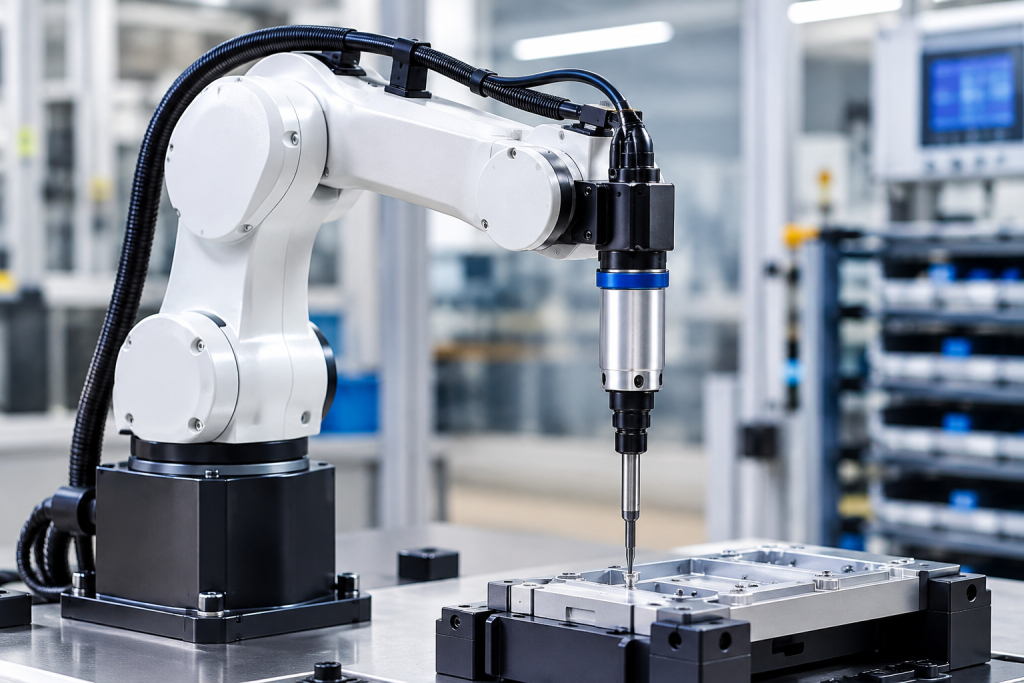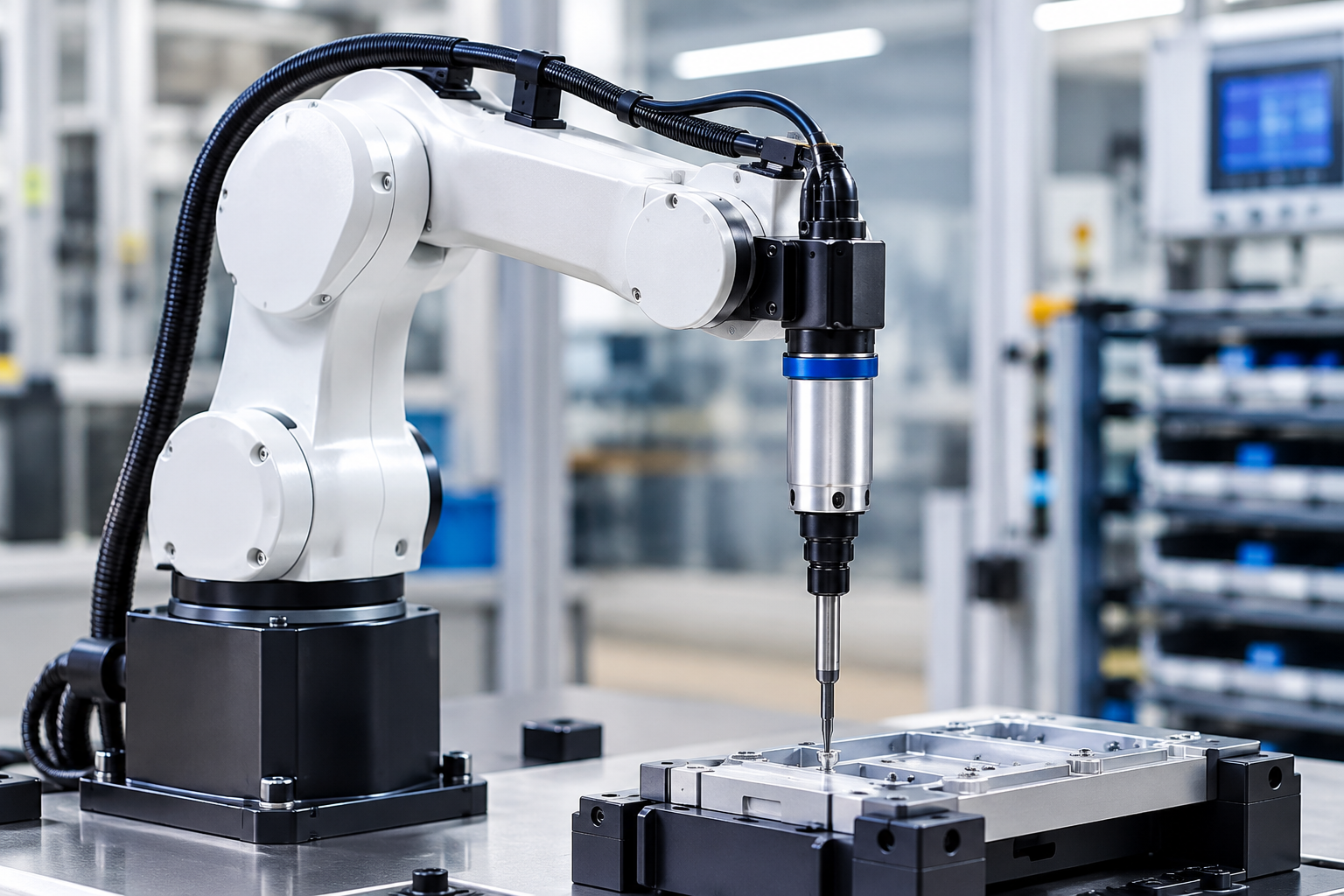
Automation plays an essential role in modern manufacturing industries as it reduces repetitive manual tasks, enhances productivity, and ensures the consistency of the product. The robotic screwdriver is one of the key tools that is utilized in automatic assembly processes. They are used for tightening and accurate screw application in electronics, automotive, machinery, and other industrial applications.
The mda3201-a is a robotic screwdriver keyword used with a particular model or product identification of a robotic screwdriver. It is important to ensure compatibility, technical documentation, features of controls, and torque range before buying or incorporating a tool with this designation. Specifications and manufacturer-specific capabilities are subject to change and should not be assumed without an official datasheet.
The understanding of the working principle, the use of the robotic screwdrivers and their benefits will help the manufacturers to decide whether automatic screw fastening is appropriate for their production or not.
What Is an MDA3201-A Robotic Screwdriver?
A robotic screwdriver is an automatic fastening device that is used to tighten or install a screw in a manufacturing or assembly process. It can be attached to a robotic arm, automated workstation, or production line to perform repetitive fastening operations with consistency, compared to a standard handheld screwdriver.
A robotic screwdriver (mda3201) can be used to identify the product being researched. However, the design and technical specifications of this should be verified using reliable manufacturer documentation.
The components of a typical robotic screwdriver system can consist of an electric or pneumatic screwdriver, a torque-control mechanism, a screwdriver bit, a screw-feeding system, sensors, and a controller. The system can also be designed to communicate with a programmable logic controller (PLC) or industrial robot, depending on the application.
These components all collaborate to move the tool, to engage the screw to be tightened, to provide the correct amount of tightening force and to finish the fastening.
How Does an MDA3201-A Robotic Screwdriver Work?
The working mechanism of robotic screwdrivers is based upon controlled rotation and accurate positioning of the screw. While the operation of the MDA3201-A Robotic Screwdriver may vary from unit to unit, a typical automatic screwdriver will perform the following steps.
1. Screw Positioning
It starts with a component or a workpiece set in an assembly fixture. The robot arm or automatic system guides the screwdriver to the location where it will be inserted.
The location of the screw hole, the programmed coordinates, or machine vision can be used to locate the screw hole and align the tool properly. It’s important to line up the bit properly to avoid damaging the screw head or the component with an off-center screwdriver.
2. Screw Feeding and Engagement
Screws can be fed to automated production systems either from a screw feeder, a screw track, or a vacuum pick-up system. In certain systems, the screws need to be inserted in the whole or in a separate-assembly operation.
This is because the screwdriver bit locks into the head of the screw. A proper bit can keep the screw in contact and minimize the risk of slip during rotation.
3. Controlled Rotation
When the screw is engaged, the motor will spin the screwdriver bit. The turning motion pushes the screw into the threaded hole or the material to be fastened.
The system should have the right torque and rotation speeds achieved for the screw size, material, and assembly needs. If too much torque is applied, the threads can be damaged or the parts themselves, and if too little torque is applied, the connection may come loose.
4. Torque Monitoring and Tightening
Some industrial screwdrivers have torque control, angle monitoring, or other feedback systems to help ensure consistent fastening.
Once the desired tightening torque is achieved, the controller will stop or adjust the motor. Depending on the sensors and software that a system contains, it can also sense fastening errors like resistance or incomplete fastening.
The above features are not necessarily characteristic of the MDA3201-A, and should be confirmed with the product’s specifications.
5. Completion and Quality Checking
Following tightening, the tool moves back in and to the subsequent fastening position. The system can log cycle data or provide fastening indication to a production controller.
If an error is found, the workstation can stop the process or notify an operator. This enables manufacturers to know the difficulties they have in assembling the product before the next process of manufacturing occurs.
What Are the Main Applications of a Robotic Screwdriver?
In several industries, products must have screw fastening that is repeated and reliable, and robotic screwdrivers have been introduced.
Electronics Manufacturing
Small screws can also be found in electronic devices, and they are tightened in such a way as not to harm the sensitive casing or internal parts. Using automated screwdrivers can help with the mounting of computers, consumer electronics, control panels, and other electronic devices.
The selection of their suitability varies according to the torque, type, and dimensions of screws, available space, and sensitivity of the components to be tightened.
Automotive Production
Fastening operations are involved in automotive assembly, from dashboards to interior panels, electronic modules to mechanical components. The use of robotic screwdrivers can assist in standardising these tasks and aid in high-volume production.
If the fastening component is critical for safety in automotive applications, the fastening equipment needs to comply with the specified engineering, traceability, and quality control requirements.
Industrial Machinery Assembly
Fastening is a repeated task that is common in the manufacturing of industrial machines, pumps, equipment housings, and mechanical assemblies. If the workpiece and fastening points are accessible for the robot, automated screwdrivers can save manual effort and provide greater consistency.
Appliance Manufacturing
There are several fasteners on washing machines, refrigerators, air conditioners, and other household appliances. Robotic screwdriver systems are useful in assembling panels, frames, brackets, and interior parts efficiently in the manufacturing process.
Medical and Precision Equipment
Controlling the fastening of some medical and precision instruments is needed to keep sensitive parts intact and preserve product reliability. Automated screw fastening can be used if the system can achieve required cleanliness, precision, validation, and documentation requirements.
What Are the Advantages of an MDA3201-A Robotic Screwdriver?
The advantages of a robotic screwdriver are dependent on the attributes of the particular robotic screwdriver, its control, and its connection to the production line. Here are some of the general benefits of an industrial automated screwdriver.
Improved Consistency
Automated fastening can perform the same programmed movement and the same tightening on a multitude of products. This decreases manual technique variations and can increase assembly uniformity.
Higher Production Efficiency
A robotic screwdriver can be used to fasten tasks in a repetitive manner with minimal manual effort. If part of a properly designed production line, it can help to shorten cycle times and help manufacturers produce more.
Actual productivity gains will vary depending upon application, screw feeding method, robot movement, and overall process.
Reduced Operator Fatigue
Often over tightened screws can lead to fatigue in long production shifts. When repetitive tasks are involved in fastening, automation moves the task to a machine, freeing up the time of the operator for other duties, including inspection, supervision, material handling, and more.
Better Process Control
Problems with fastenings can be detected through the use of a suitably fitted torque monitoring and feedback system. This facilitates documented assembly procedures, and consistent results are more easily identified.
Potential Reduction in Product Damage
Automated screwdrivers, when properly set up, can help prevent cross-threading, damage to the screw head, and overtightening. The benefits, however, are dependent on the right tool being used, the alignment, the programming, and maintenance.
Easier Integration Into Automated Production
A robotic screwdriver can be combined with an industrial robot, fixture, or conveyor, or into a PLC-controlled machine, depending on the interface and mounting configuration. It can help facilitate a more streamlined and repeatable assembly process if it is integrated successfully.
What Should You Check Before Using the MDA3201-A Robotic Screwdriver?
Appropriate product selection: Check the official technical information of the product before selecting it as the MDA3201-A. Factors such as the torque range, rotational speed, motor type, screw size compatibility, power specifications, controller interface, size, and mounting configuration are all crucial.
Also check if it is capable of automatic screw feeding, torque feedback, checking the screws when fastened, and communication with industrial automation devices.
Take into account what materials are being joined, need to produce, available space, and the environment in which the production will take place. Ensure replacement bits, spare parts, maintenance procedures, and technical support are available.
Last but not least: evaluate the entire workstation, not the screwdriver. When integrating automated equipment, these are essential: proper guarding, emergency stops, electrical safety, robot safety measures, and operator training.
Conclusion
When exploring screw fastening automation equipment, it’s worthwhile exploring the useful product designation mda3201-a. The exact details and specifications of this product, however, should be verified with an official product datasheet or manufacturer source.
Typically, robotic screwdrivers position a tool, grip a screw, apply a controlled rotation, and finish the fastening process based on preprogrammed fastener requirements. They’re applied in electronics, auto, precision equipment, appliances, industrial machinery, and electronics assembly.
Consistent fastening, better production efficiency, less operator fatigue, and better process control are among their primary benefits. With the verification of technical specifications and matching of the tool to the application, the manufacturer can make an informed decision regarding automated fastening solutions.
Frequently Asked Questions
What Is an MDA3201-A Robotic Screwdriver?
This search is looking for products with a designation of MDA3201-A, a reference to a robotic screwdriver. It is essential that its manufacturer, design, and exact capabilities be confirmed by official documentation.
How Does a Robotic Screwdriver Work?
A robot arm equipped with a screwdriver assembly features a fastening tool that is positioned in place, engages the screw head, extends the bit, spins the bit, and secures the screw. Torque, angle, and/or fastening completion may be monitored by sensors and controllers, depending on the system.
What Industries Use Robotic Screwdrivers?
They are commonly used in electronics, automotive, appliance, industrial machinery, and precision equipment manufacturing.
What Are the Main Benefits of Robotic Screwdrivers?
Some of the common advantages are: uniform fastening, fewer manual repetitive jobs, increased production efficiency, and potentially better quality control.
Can a Robotic Screwdriver Prevent Overtightening?
Using a system that is properly set up and has appropriate torque control can help avoid overtightening. Actual performance will vary as per the characteristics of the fastener to be worked, the features of the tool, its calibration, and programming.