I’ve been hearing a lot about Google Gemini these past few months, but at first I thought, “Oh, it’s just another AI buzzword. I’ve heard a lot about Google Gemini in the past few months, but it seemed like just another AI buzzword at first. To find out, I began to explore it myself, and that is when things began to make sense. Gemini is a suite of multimodal AI models and LLMs (large language models) that Google has created, far from just a mere chatbot. It can interpret and manipulate various forms of information, such as text, graphics, code, sound and others. It offers much more flexibility than standard Artificial Intelligence tools, particularly for content creation, research, automation, and problem-solving.
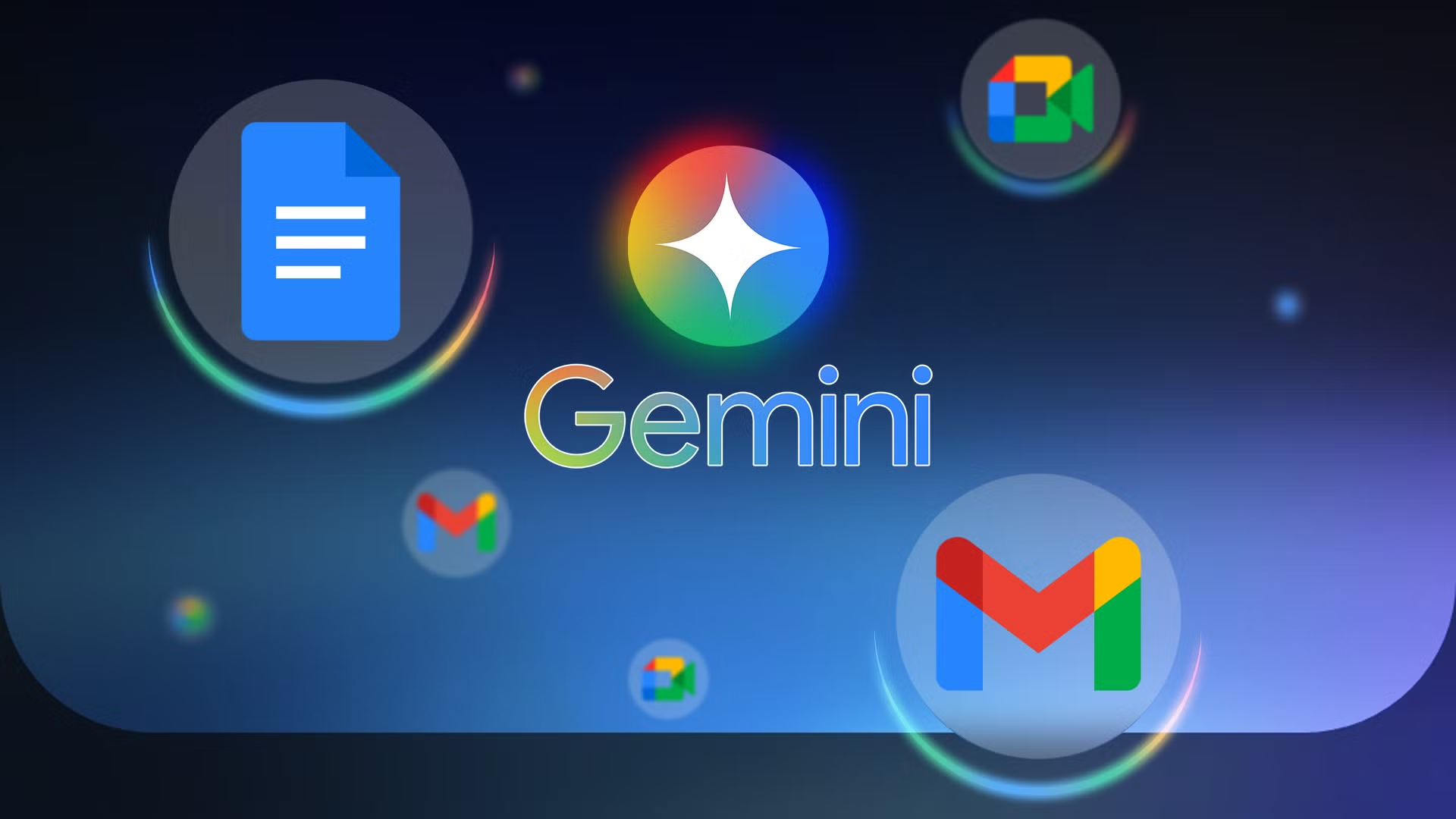
The integration of this AI tool into everyday applications such as Gmail, Docs, Spreadsheets, and even Android devices is truly impressive, turning AI into a more practical and accessible solution. Whether drafting an email, coming up with new ideas, summarizing content, or even coding, Gemini increases productivity without a steep learning curve.
I personally have been using Gemini as a content strategist, and it has been immensely helpful in generating new ideas, refining content structure, identifying errors, and speeding up research. It’s not a replacement for human creativity, but rather it complements it and makes the whole workflow faster, smarter, and more efficient.
I will explain in this article what it is, how it works, real-life examples, and much more in order to make sense of it.
What is it that Google Gemini is?
Google Gemini is a family of powerful multimodal AI models built by Google that can understand and create content that’s indistinguishable from human content across text, images, audio, video, and code. It acts as an intelligent assistant that can assist users in various daily tasks, including writing, researching, problem-solving, and programming.
Let’sface the reality: Gemini was initially experimented with on Google Bard and is intended to provide more precise reasoning, context understanding, and interactions within Google’s ecosystem. It can be used with other apps such as Docs, Gmail, and other Workspace apps to enhance productivity for both work and personal use.
Google Gemini can handle complex questions, provide advanced reasoning, and support real-time voice interaction (Gemini Live), making it more than just a chatbot, but a powerful AI tool for learning, creativity, and technological tasks.
We Have Some Google Gemini Versions
Gemini 3.5 Flash
Google’s newest big AI model, Gemini 3.5 Flash, has taken a giant leap in agentic AI workflows, long-context understanding, multimodal reasoning, and real-time task execution. The model can now process very complicated prompts and complicated coding challenges with much greater consistency and reasoning than previous generations of Gemini, and it can automate enterprise tasks and do more in-depth research. This is believed to be Google’s most powerful agentic and coding model to date, as compared to Gemini 3.1 Pro. Together, they are also making significant strides on Gemini 3.5 Pro, which is currently being developed for testing and will be available in the near future.
Key Strengths:
- Advanced Agentic AI Workflows
- Improved Long-Context Reasoning
- Real-Time Multimodal Processing
- Enterprise-Scale Task Automation
Gemini 3.1 Flash-Lite
The latest version of the Gemini 3 series is out and is currently the most efficient for high-volume use. It was designed to be a “budget king” for high-throughput intelligence at scale in massive enterprise systems. It is 2.5 times faster than earlier versions of Flash and is the developer of choice when data extraction is required quickly and cheaply or for real-time translation.
Key Strengths:
- Extreme Throughput
- Optimized for Sub-Agents
- Cost-to-Intelligence Ratio
- High-Speed Translation
Gemini 3.1 Pro
Gemini 3.1 Pro, which was launched on February 19, 2026, is the current flagship model for complex, multi-step tasks. It added “vibe-coding” functionality, enabling the model to create and display a number of native interactive SVG-based components and real-time dashboards. Also far more intelligent than the 3.0 generation, this one has doubled reasoning power on logic-related tasks such as ARC-AGI-2.
Key Strengths:
- Advanced Agentic Workflows
- Interactive Code-Based Animation
- Complex System Synthesis
- Dynamic Thinking
Gemini 3 Deep Think
This special model will be announced on December 3, 2025, and will be deployed to Ultra subscribers, concentrating on “System 2” deliberate reasoning. It requires a lot of computing power to reason through a problem before it can respond, and so can solve graduate-level science, advanced engineering puzzles, and competitive-level coding challenges that other models can’t.
Key Strengths:
- Hyper-Complex Math Solving
- Scientific Research Synthesis
- “System 2” Deliberate Reasoning
- Deep Logical Consistency
Gemini 3 Flash
This version, which is due for release on December 17, 2025, introduced “Pro-grade” intelligence to the Flash lineup. It was created to serve as the new standard for speed and efficiency for use in real-time “Agentic Loops” in which the AI is required to navigate, plan, and take action autonomously.
Key Strengths:
- Let’s get Frontiers of Intelligence at Speed!
- Native Multi-Modal Agentic Loops.
- Academic-Level Reasoning
- and Low-Latency API Performance
Google Gemini Ultra (Now Gemini Advanced)
Now known as ‘Gemini Advanced’, Gemini Ultra used to be Google’s top-rated model for artificial intelligence. The new models are becoming more popular, however. It remains in a few plans in some parts of the world.
Key Strengths
- Multimodal Skills: Understands various forms of data.
- Processing Power: Somewhat old but can handle tasks when they are tough, as well as new options.
Google Gemini 1.5 Pro
The newest addition to the Gemini series is Gemini 1.5 Pro. It performs as well as the former Ultra, but is even more efficient.
Key Strengths
- Coding Skills: It’s actually very helpful to the developer since it can create good-quality code.
- Information Retrieval: This technology is good at finding specific information in large datasets.
- Advanced Thinking: Ability to carry out logical tasks and follow instructions with a good level of reasoning.
Google Gemini (1.0) Pro
Gemini (1.0) Pro is still a good option and is available.
Key Strengths
- Balanced Model: This balances power and versatility well, is more powerful than the light Nano, but less powerful than the 1.5 Pro.
- Wide Task Range: Applicable to a range of AI tasks that require moderate to high power.
Google Gemini Nano (1.0)
For on-device AI, Gemini Nano (1.0) is the light version.
Key Strengths
- On-Device AI: Fab for tasks that require speed and privacy on smartphones.
- Real-Time Processing: Can process images and videos immediately.
- Offline Tasks: This is best for voice translation or summarizing text, without internet access.
Google Gemini 2.0 (Flash / Flash-Lite / Pro)
Google’s multimodal AI is undergoing a significant transformation with the introduction of Gemini 2.0. It provides more powerful reasoning, quicker responses, and greater cost-efficiency in its variants. The Flash series is designed for speed and cost-effectiveness, whereas the Pro series is designed for advanced workloads and intelligence.
Key Strengths
- Multimodal Intelligence: Manages text, images, audio, and video in a more accurate and detailed manner.
- For high-volume applications, Speed & Efficiency: Flash & Flash-Lite offer low latency and high output.
- Advanced Reasoning: Increased logical thinking, better follows directions, and greater knowledge of the context.
Google Gemini 2.5 (Flash / Flash-Lite / Pro)
Gemini 2.5 is the highest level of Gemini. It is renowned for its advanced “thinking” capabilities, very long context windows, and enterprise-level reliability, making it the gold standard for high-performance AI.
Key Strengths
- Deep Reasoning Power: Excellent at solving complex problems, analysing multi-step tasks, and dealing with advanced logic.
- Large Document, Data, or Conversation Window: Can process and understand very large documents, data, and conversations without losing coherence.
- Superior Multimodal Performance: Capable of high-precision analysis of text, images, audio, and structured data.
The Potential of the West Side Community Center
The prospects for Gemini appear bright, with Google maintaining its focus on the platform as a key component of its AI strategy. The integration with Search, Workspace, Android, and Cloud indicates that Gemini is poised to transform from being just a chatbot into a comprehensive AI tool that can drive real-world decision-making, automation, and enterprise processes.
With the increasing adoption of multimodal AI, Gemini’s versatility in processing text, images, audio, and long-context data will prove invaluable for research, analysis, content generation, product development, and more. As developers gain exclusive access to increasingly robust APIs and the models continue to evolve, Gemini is poised to become a major influence on the future of AI in the business and professional world.
The recent Gemini model launches also indicate a growing emphasis on autonomous AI agents, enterprise automation, and multimodal reasoning systems, which are designed to engage in complex reasoning tasks with minimal human involvement. This change transforms Gemini into more than just a chatbot, moving closer to a comprehensive AI operating system for productivity and decision-making.
Conclusion
In conclusion, Google Gemini is a powerful tool that has revolutionized the landscape of data science. Easy to use and suitable for AI, it is a necessity for data scientists. In the future, Google Gemini will continue to be a major player in the field of data science and AI. For those with an interest in data science, you won’t want to miss out on Google Gemini.
FAQs: What is Google Gemini
Is Google’s Gemini larger than ChatGPT?
This depends on the work at hand. Google Gemini excels in multimodal tasks, long documents, and Google Workspace integration. ChatGPT tends to excel in tasks that involve lengthy text, programming, and detailed reasoning. There are many users who prefer both for various purposes.
What are the dangers or restrictions with Google Gemini?
Google Gemini may sometimes provide wrong or inconsistent responses and may not always display sources unless explicitly requested. Some inputs might be used to enhance the system; users are encouraged not to provide sensitive information.
What is the latest version of Google Gemini to use?
For quick and inexpensive tasks, use Gemini Flash; for deeper reasoning or extensive documents, use Gemini Pro or 2.5 Pro; and for on-device or offline mobile usage, use Gemini Nano.
Is Google Gemini suitable for business or enterprise applications?
Yes. Google Gemini is ideal for enterprise applications such as research, data analysis, coding support, and workflow automation, particularly when handling extensive files or Google Workspace tools.
Which is the newest Google Gemini model?
The latest Gemini model is Gemini 3.5 Pro, which focuses on advanced reasoning, multimodal understanding, agentic AI workflows, and enterprise-scale task automation. It introduces several enhancements over previous versions of Gemini, such as better long-context support, coding performance, and the ability to perform tasks in real time.