Technology has changed the way people live, work, communicate, and solve problems. Traditional computers have grown immensely powerful, but there are still some problems that are complex and difficult, or too time-consuming to solve on the fastest machines. Quantum computing comes into the scene at this point. So, what is quantum computing and how might it alter technology’s future?
The term quantum computing describes a more sophisticated type of computing that operates in a different manner from conventional computers using the principles of quantum mechanics. Rather than using a series of bits to indicate a 0 or a 1, quantum computers use bits called qubits. In this unusual method, quantum computers might be able to solve some of the problems at a much faster rate than classical computers.
What is Quantum Computing?
Comparing a traditional computer to understand what is quantum computing is helpful. In classical computers such as phones, laptops, computers, and so on, information is processed in bits. The value of a bit is either 0 or 1.
Instead, quantum computers will employ “qubits.” Superposition is a principle by which a qubit can simultaneously be 0, 1, or a mixture of the two. This enables quantum computers to work differently.
The key takeaway from quantum computing is not that it’s a faster version of a regular computer. It’s a whole new way of information processing. The advantages of quantum computers are that they can perform certain complex calculations that are difficult to compute on a classical computer.
What is Special About Qubits?
Qubits are also one of the most critical components of a quantum computer. The qubit differs from the traditional bit in that it can benefit from the special properties of quantum mechanics.
One of these properties is known as superposition. Superposition means that the qubit can be in several different states simultaneously until it is measured. This will enable quantum computers to explore different computational possibilities that cannot be easily achieved by classical computers.
The other obvious principle is quantum entanglement. Entangled qubits can be strongly correlated with each other. This relationship can be applied to carry out intricate calculations and coordinate information across a quantum system.
This is what makes the answer to how quantum computing is more interesting than just saying that it is an advanced computer.
How Does Quantum Computing Work?
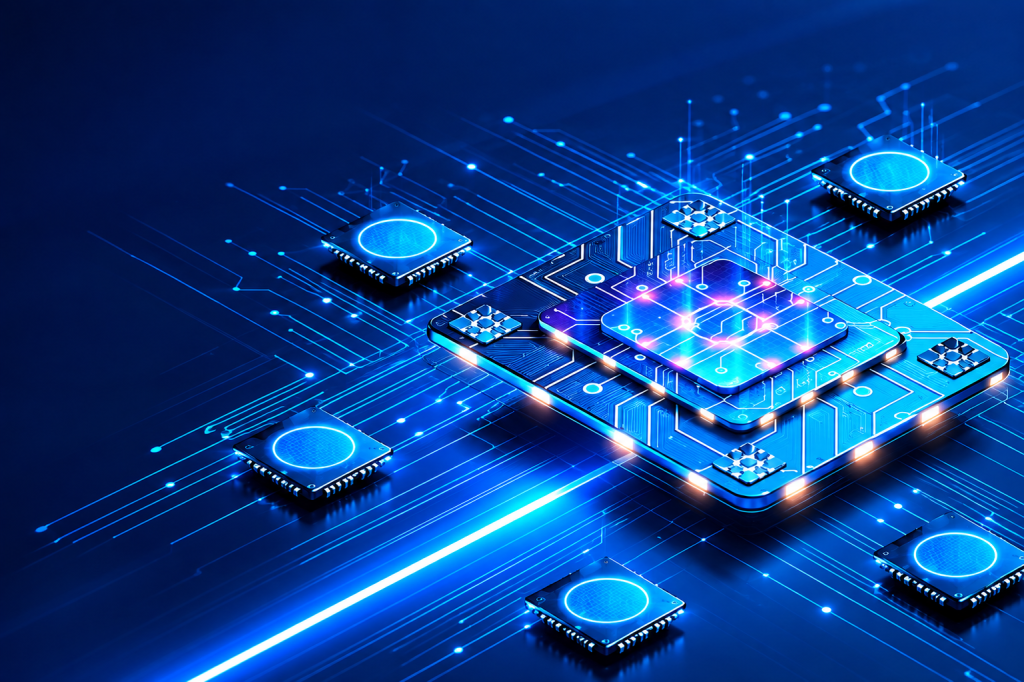
Specialized hardware is required for the creation, control, and measurement of qubits in quantum computers. The qubits can be fabricated in superconducting circuits, trapped ions, photons, or other sophisticated means, depending on the quantum computer’s kind.
The qubits are very sensitive to their environment and must be carefully controlled within the quantum system. Errors can creep into quantum calculations due to heat, electromagnetic interference, etc., from outside sources.
The typical quantum computing procedure is to prepare the qubits, perform quantum operations, let the qubits interact, and then measure the outcome of the process. The purpose of quantum algorithms is to take advantage of superposition and entanglement in order to efficiently solve particular problems.
But quantum computers can sometimes give probabilistic results. This also implies that the calculations might have to be repeated several times to obtain reliable results.
Why is Quantum Computing so Powerful?
One of the strengths of quantum computing is that it can solve some of the problems that are complex for classical computers. The number of qubits determines the number of possible states a quantum system can represent, which grows exponentially with the number of qubits.
This may be useful for special applications in solving complex combinations of problems, simulations, and optimizations, for which quantum computers could be useful.
For instance, one application of quantum computing could be to analyze complex molecules. This may facilitate scientific research, for example, in medicine, chemistry, and materials science.
It can also be used to address specific optimization challenges, including finding routes that are more efficient, optimizing supply chains, or handling intricate financial models.
It is worth noting that quantum computers will not completely replace traditional computers. Classical computers work great for most things like browsing the web, creating documents, sending emails, and playing videos.
What are Some of the Challenges That Quantum Computing Could Solve?
Understanding what quantum computing is and exploring its applications is one of the most exciting parts of understanding quantum computing.
Scientific discovery could benefit from quantum computing as it may aid in the simulation of molecules and materials. Unlike traditional computers, where the number of interactions may grow quickly, it is difficult for these computers to simulate complex quantum systems.
Research into quantum technology could also help in the production of new drugs, as it will enable scientists to better understand the behavior of molecules.
One potential application is optimisation. For businesses and organizations, it is common to have to select the most suitable option among the countless options available. Some of these problems could be solved more efficiently in the future with the help of quantum algorithms.
Other possible applications are:
- Advanced scientific simulations
- The design of new drugs and molecular studies
- Financial modeling
- Supply chain optimization
- Artificial intelligence research
- Cybersecurity and cryptography
- It provides modeling of the climate and environment.
The potential applications are the reasons why researchers and tech companies invest so heavily in quantum tech.
How Could Quantum Computing Affect Cybersecurity?
One of the most significant impacts of quantum computing on cybersecurity may be its potential to solve complex mathematical problems that are currently impractical for classical computing systems.
If a quantum computer is powerful enough, it could be able to solve some maths problems much more quickly than conventional computers. This has raised questions around the security of some current cryptographic methods.
Meanwhile, research is underway on new encryption methods that will be impervious to the attacks of quantum computers. It is frequently called “post-quantum cryptography”.
Hence, the cybersecurity sector may face challenges and opportunities that quantum computing can bring.
What are the Challenges that are Facing Quantum Computing Today?
Although it has great potential, quantum computing is still in the development phase. Creating and sustaining quantum computer systems is quite difficult.
The qubits are very fragile and can lose their quantum state, a process called decoherence. Errors can be introduced by even minor environmental changes.
Skilled engineers and system control technologies are also needed for quantum computers. Certain quantum systems are required to be very cold.
An additional difficulty is error correction. Due to the fragility of qubits, quantum computers must employ sophisticated error detection and correction mechanisms in order to preserve the valuable quantum information without altering the qubits.
Researchers are making ongoing advancements in quantum hardware, software, algorithms, and error correction techniques.
Are Quantum Computers the End of Traditional Computers?
There is probably no simple answer for that one; quantum computers and classical computers are expected to be used for different tasks.
Everyday computing tasks are well suited to old-fashioned computers. Some very specific problems are being tackled by developing quantum computers, for which such an algorithm might be useful.
Hybrid systems are possible for people to use in the future, where they could mix classical and quantum computers. A classical computer would be used for standard operations, and a quantum processor used to perform specific complex calculations.
A combination of these could offer strong new technological possibilities.
What’s in Store for Quantum Computing?
There is much more to be done before quantum computing is ready, but the prospects are exciting. Researchers are striving to create more stable and reliable quantum systems that include better error correction.
The advancement of quantum hardware could lead to the discovery of new applications and powerful quantum algorithms.
The applications of quantum technology could be beneficial to industries like healthcare, finance, manufacturing, logistics, and scientific research at some point in the future.
A more realistic possibility for quantum computing, however, would be widespread practice sometime in the future. It is still in its infancy, and many predictions of its future rely on further advances in hardware and software.
Understanding quantum computing now will aid individuals in comprehending one of the most significant technologies of the modern era.
What is the Bottom Line Regarding Quantum Computing?
Quantum Computing is an innovative method for information processing that is based on the principles of quantum mechanics. Qubits, superposition, and entanglement can enable quantum computers to solve some problems in a different manner than classical computers.
The technology is still in a stage of development, but the applications are potentially great. Quantum computing has the potential to impact various sectors in the future, from scientific research and drug development to cybersecurity and optimization.
As researchers advance in creating more powerful quantum technologies, understanding what is quantum computing is growing in importance. Quantum computers are not likely to replace current computers, but they could prove to be useful in addressing some of the world’s most complex computational problems.
Frequently Asked Questions
How To Explain Quantum Computing to a 5-Year-Old?
Quantum computing refers to an approach to computing that utilizes qubits and quantum mechanics differently from traditional computers, Quantum computing.
What is the difference between a quantum computer and a normal computer?
In a normal computer, binary bits are 0 or 1. A quantum computer is based on the quantum concepts of superposition and multiple possibilities, which are represented by qubits.
What Are Qubits?
In quantum computing, the unit of information is called a qubit. Quantum bits share a similarity to bits in classical computing systems, but with quantum properties.
What makes Quantum Computing important?
The significance of quantum computing lies in its potential to address some challenging problems in fields like science, medicine, cybersecurity, optimization, and materials research.
Are regular computers going to be replaced by quantum computers?
No. Quantum computers will be used in addition to traditional computers.
Which is the biggest obstacle to quantum computing?
A key difficulty is the stability of the qubits and minimizing errors from environmental noise and quantum decoherence.